Harmonic Counterpoint 和声对位
- Type 类型
- Pedestrian Bridge
- Location
- Nashville I-40 Interstate 美国田纳西州纳什维尔 I-40 州际公路
- Competition 竞赛
-
2022 NOMA Barbara G. Laurie Student Design Competition
2022 NOMA Barbara G. Laurie 学生设计竞赛
https://www.noma.net/conference-2022/ - Award 奖项
- Second Place 第二名
- Team 团队成员
- NOMAS Cornell Team 康奈尔大学 NOMAS 团队
- Year
- 2022
The 2022 competition addressed North Nashville, a historically Black community deeply impacted by redlining, displacement, and the construction of Interstate 40 in the late 1960s. The brief called for a new cultural and educational hub to replace an existing pedestrian bridge and reconnect neighborhoods divided by the highway, including Jefferson Street, Hadley Park, Pearl-Cohn High School, and nearby HBCUs.
Titled Harmonic Counterpoint, our proposal draws from the musical concept of counterpoint, bringing distinct cultural, social, and environmental programs together within a unified civic framework. The project transforms the bridge from a point of passage into a shared community destination, creating spaces for gathering, learning, family support, and participation. By strengthening connections across the neighborhood, the proposal reimagines infrastructure as a platform for reconnection, agency, and collective life.
2022 年竞赛聚焦于纳什维尔北部这一历史悠久的非裔社区。该地区深受住房信贷“红线”政策、居民被迫迁离及 20 世纪 60 年代末 40 号州际公路建设的影响。竞赛要求以新的文化与教育枢纽替代现有人行桥,重新连接被高速公路分隔的街区,包括杰斐逊街(Jefferson Street)、哈德利公园(Hadley Park)、珀尔-科恩高中(Pearl-Cohn High School)及附近历史上以非裔学生为主的高校(HBCUs)。
方案名为“和声对位”,借鉴音乐中对位法的概念,将不同的文化、社会与环境功能整合于统一的公共空间体系。项目把桥梁从单纯的通行节点转化为社区共享的目的地,提供聚会、学习、家庭支持与公共参与的空间。通过强化街区之间的联系,方案将基础设施重新构想为促进社区重新连接、居民自主参与和共同生活的平台。
Crossing the Divide 以交叉回应割裂
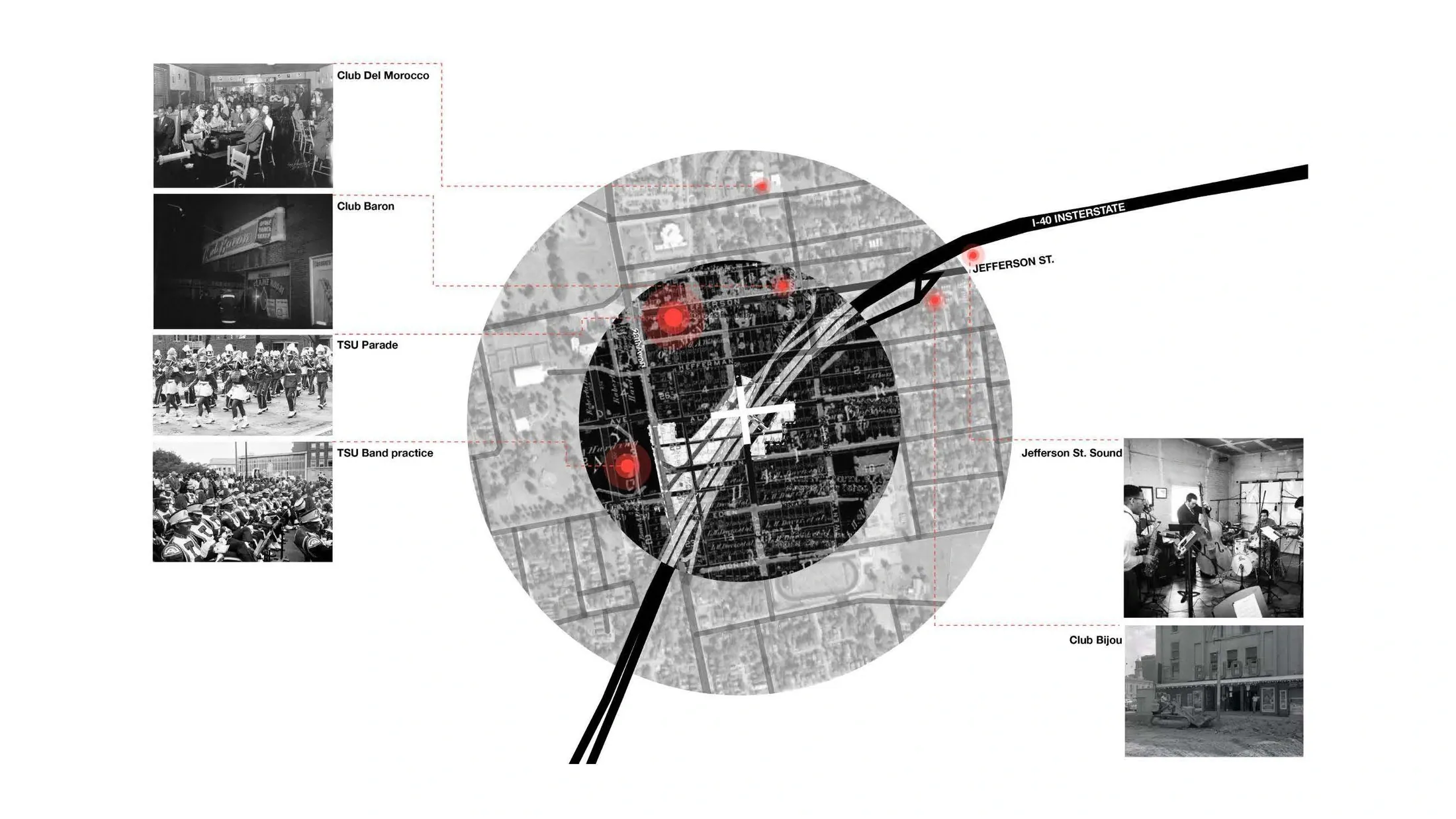
North Nashville’s historically Black neighborhoods once sustained a vibrant musical and social life. The construction of I-40 severed the urban fabric and disrupted everyday connections. Harmonic Counterpoint proposes a community center across this divide, bringing movement, cultural memory, and public activity together as a shared civic space.
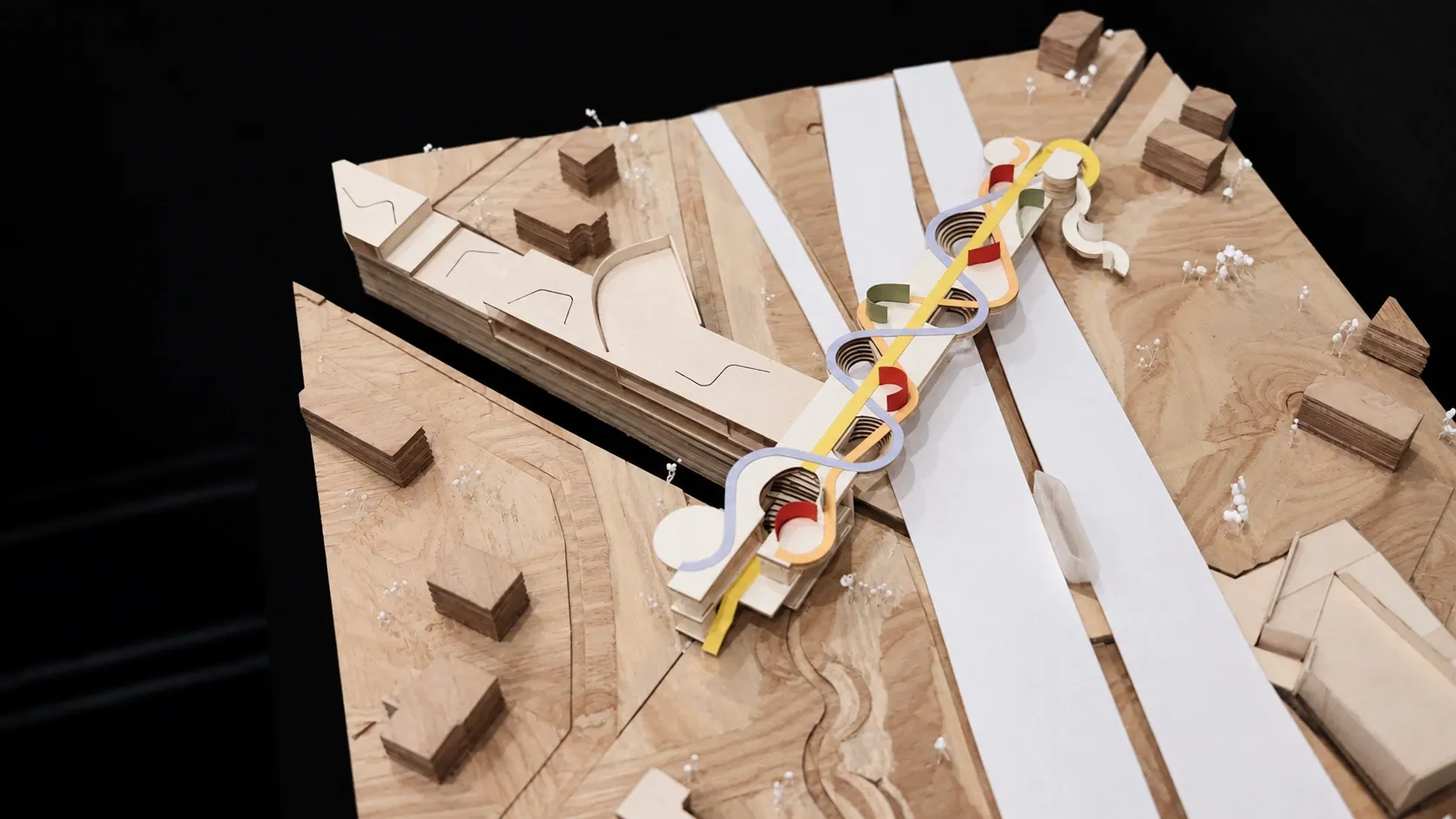
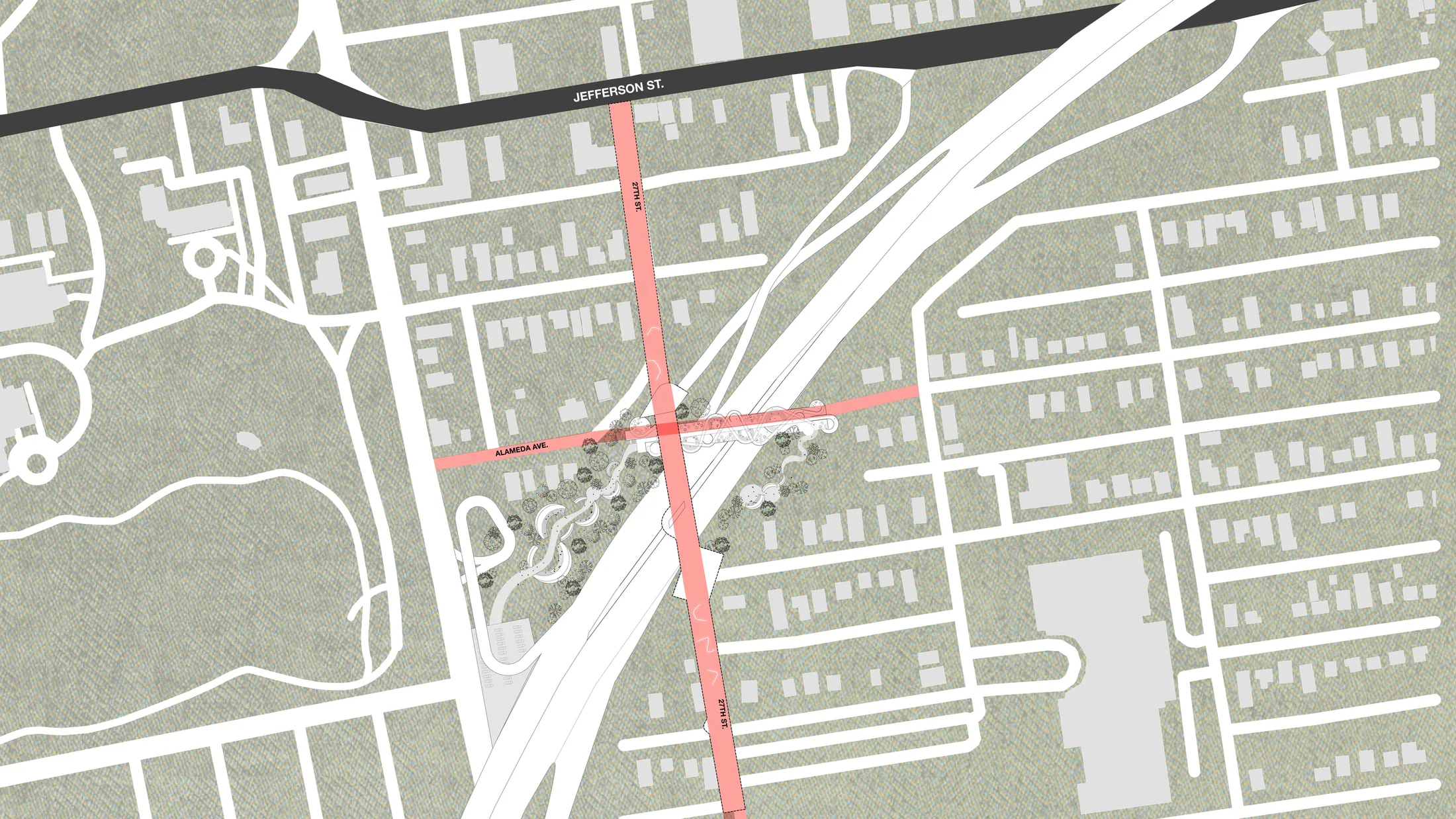
An east–west bridge crosses above the highway, while a north–south tunnel passes beneath it. Together, these routes form an X-shaped connection that reconnects the neighborhood in two directions. What was once a dividing edge becomes a shared point of passage, pause, and encounter.
北纳什维尔曾拥有活跃的非裔社区与音乐文化。I-40 高速公路的建设切断了原有城市肌理,也削弱了街区之间的日常联系。“和声对位”以一座跨越高速公路的社区中心回应这一割裂,将交通连接、公共活动与地方记忆重新编织在一起,使基础设施成为社区共享的公共空间。
方案以东西向的桥梁跨越高速公路,以南北向的隧道从其下方穿行,形成“X”形的连接关系。两条路径从不同方向重新接续街区,把原本阻隔社区的边界转化为可以穿行、停留与相遇的公共节点。
.jpg.webp)

Public Life on the Bridge 桥上的公共生活
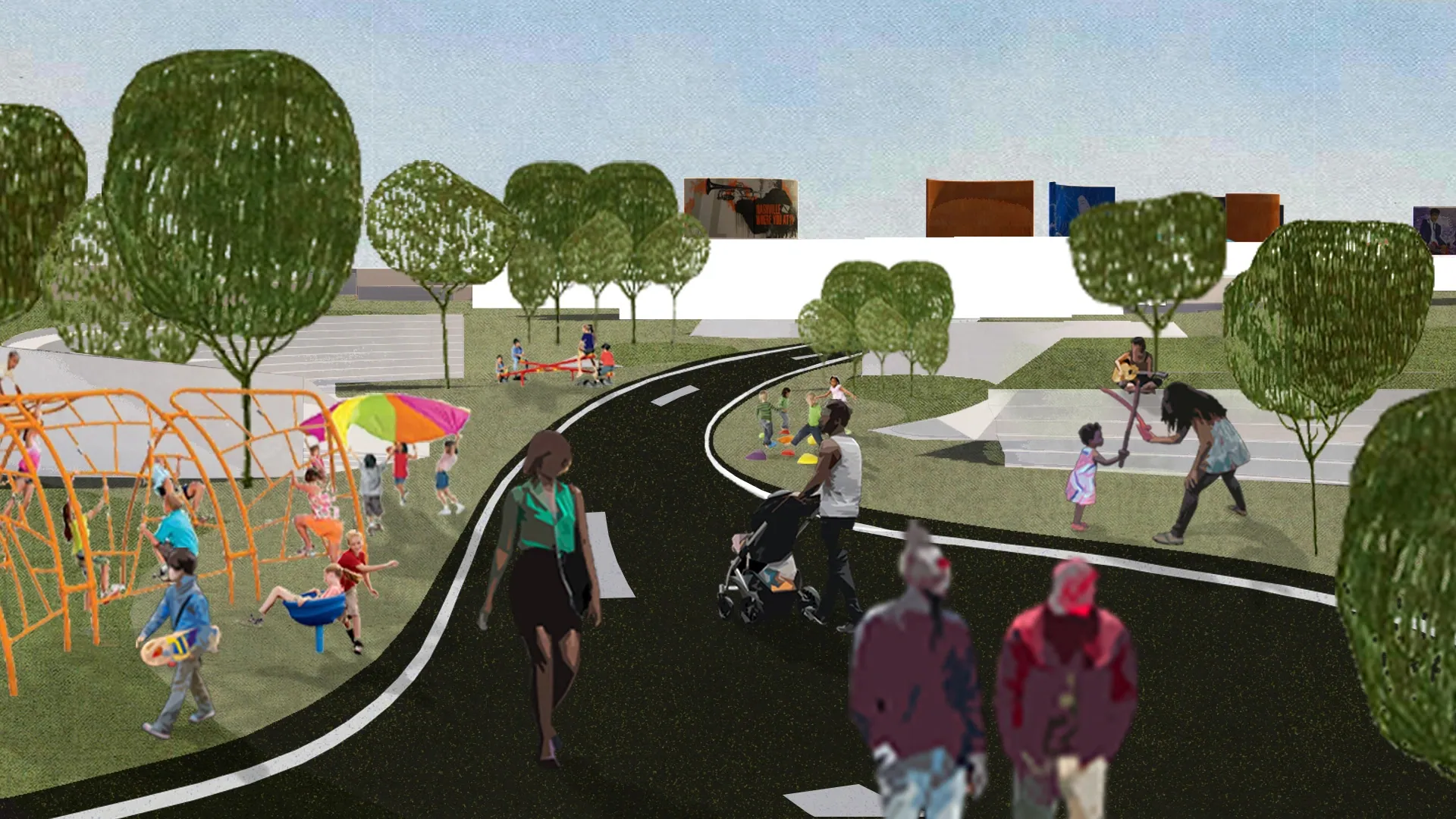
The bridge’s free-flowing, organic geometry creates an open public landscape, weaving pedestrian circulation through small theaters, gathering areas, and exhibition spaces. Crossing becomes more than a journey from one side to the other: residents can pause for performances or shared activities, while local artists gain a platform to exhibit their work and tell the neighborhood’s stories. The bridge becomes a public stage for the community’s future.
桥梁以自由、有机的曲线组织开放而通透的公共空间,将步行流线与小型剧场、集会场所及展览空间相互串联。通行不再是唯一目的:居民可以在这里停留、观看演出或参与活动,当地艺术家也能展示作品、讲述社区故事。桥梁由此成为面向社区未来的公共舞台。
.png.webp)
Music and Memory Below 地下的音乐与记忆
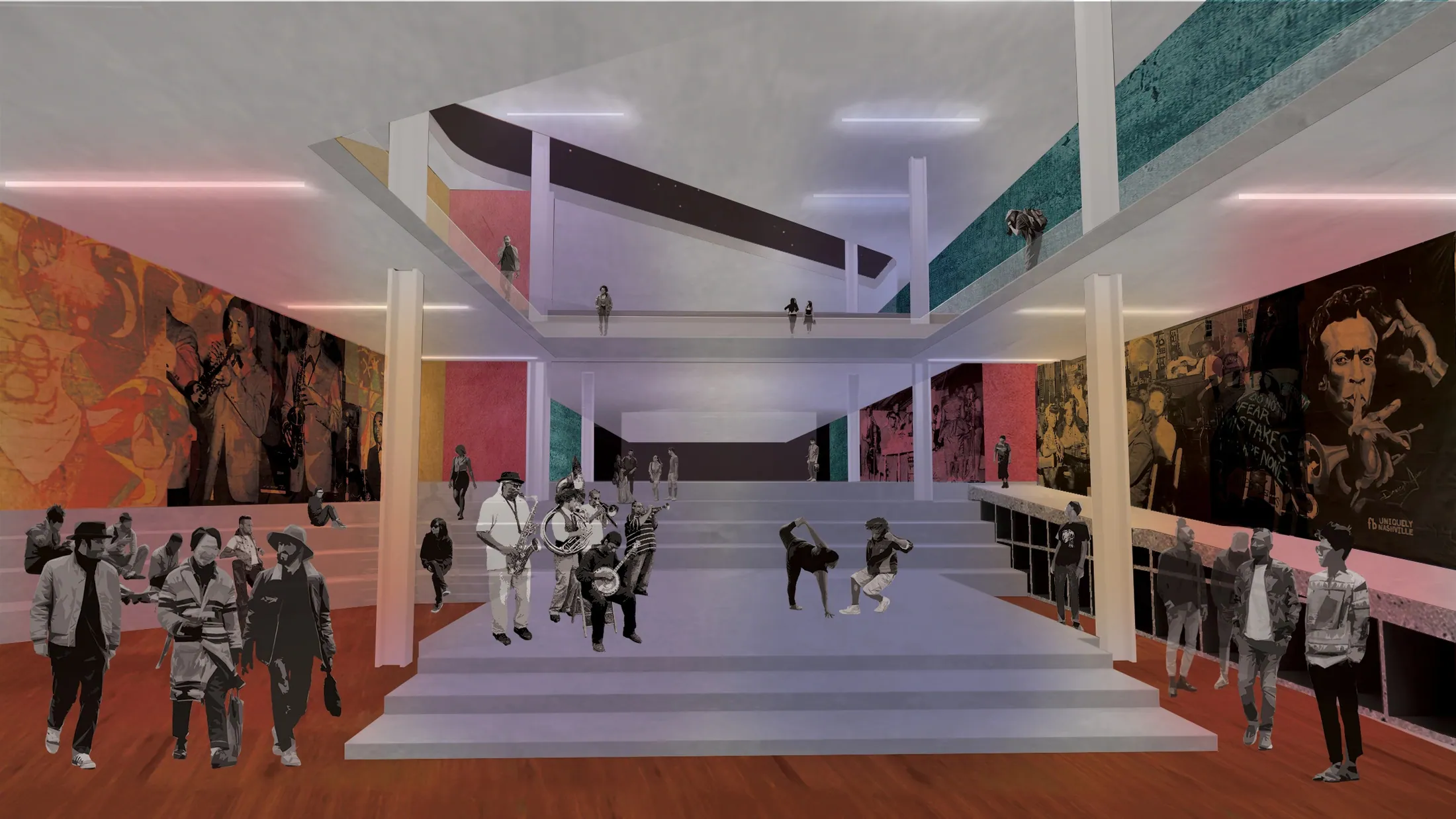
In contrast to the bridge’s fluid form, the tunnel uses an orthogonal geometry to create more inward-looking, intimate spaces. Jazz performances, dance, and bars reintroduce musical and social activities central to the neighborhood’s cultural memory. The tunnel looks back to the past while the bridge looks toward the future; their distinct spatial experiences unfold in dialogue, like voices in musical counterpoint.
与桥梁的自由形态相对,隧道以规整的正交几何构建更为内向、亲密的活动空间。爵士表演、舞蹈与酒吧等功能重新引入社区曾经重要的音乐与社交生活,使地下路径成为承载历史记忆的场所。隧道回望过去,桥梁面向未来;两种空间体验在行走中形成彼此呼应的“对位”。
.PNG.webp)
Where the Routes Meet 让连接成为相遇
At the intersection, a stepped auditorium links the tunnel, ground level, and bridge into a continuous public node. More than a change in elevation, it creates a setting for performances, gatherings, and everyday encounters. Music and public activity connect the neighborhood’s past, present, and future, turning a route across the highway into a place for shared community life.
桥梁与隧道的交汇处设置阶梯式礼堂,将地下、地面与桥面串联为连续的公共节点。这里不仅承担高差之间的交通转换,也容纳表演、集会与日常停留。音乐与公共活动成为连接社区历史、当下与未来的媒介,使跨越高速公路的路径同时成为共享生活的场所。