Reflection & Refraction 反射与折射
- Type 类型
- Sound Museum
- Location
- Conceptual design 概念设计
- Instructor 指导教师
-
Prof. Sasa Zivkovic
Prof. Felix Heisel
T.A. Oonagh Davis Sasa Zivkovic 教授
Felix Heisel 教授
Oonagh Davis 助教 - Year
- 2020
Working with sound as a medium and the pores and layers of a sponge as a formal starting point, this project explores the relationship between geometry, openings, and bodily perception. Studies of sound reflection and paper models develop into a wearable device, then into a sound museum set within an undulating landscape.
Interconnected polyhedral chambers of different sizes bring the paths of sound into dialogue with the movement of visitors. Rather than treating sound only as an exhibit, the museum explores how openings, enclosed volumes, and terrain can make listening part of the spatial experience.
本项目以声音为媒介、以海绵的孔隙与层叠结构为形态线索,探索几何表面、开口与身体感知之间的关系。研究从声波反射与纸模实验出发,经由可穿戴装置,逐步发展为嵌入起伏地形的声音博物馆。
设计将不同尺度的多面体腔体相互连接,使声音的传播路径与人的行走路线在空间中交织。博物馆不把声音仅仅作为展品,而是通过开口、腔体与地形之间的关系,探索一种可以被穿行和感知的听觉空间。
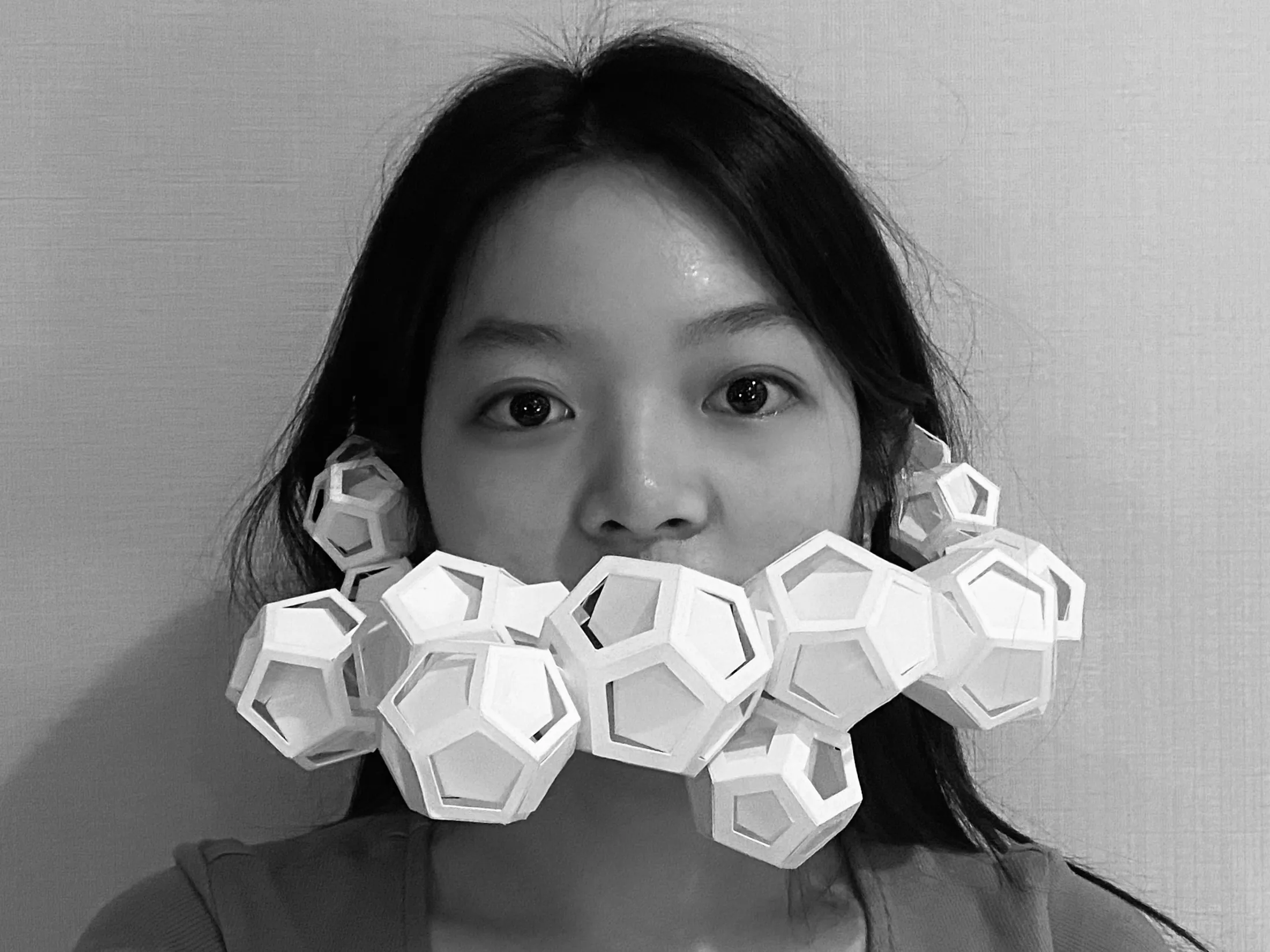
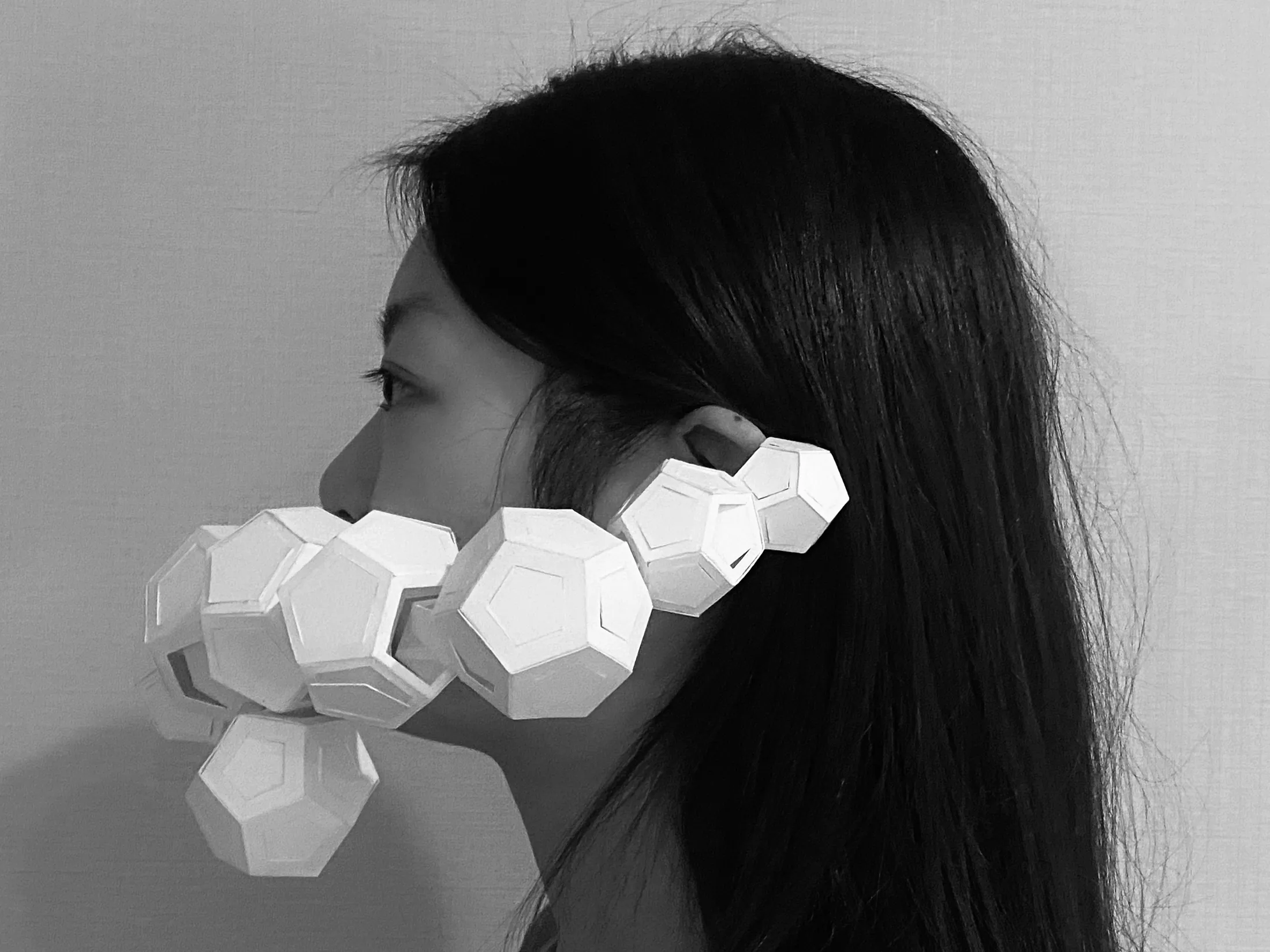
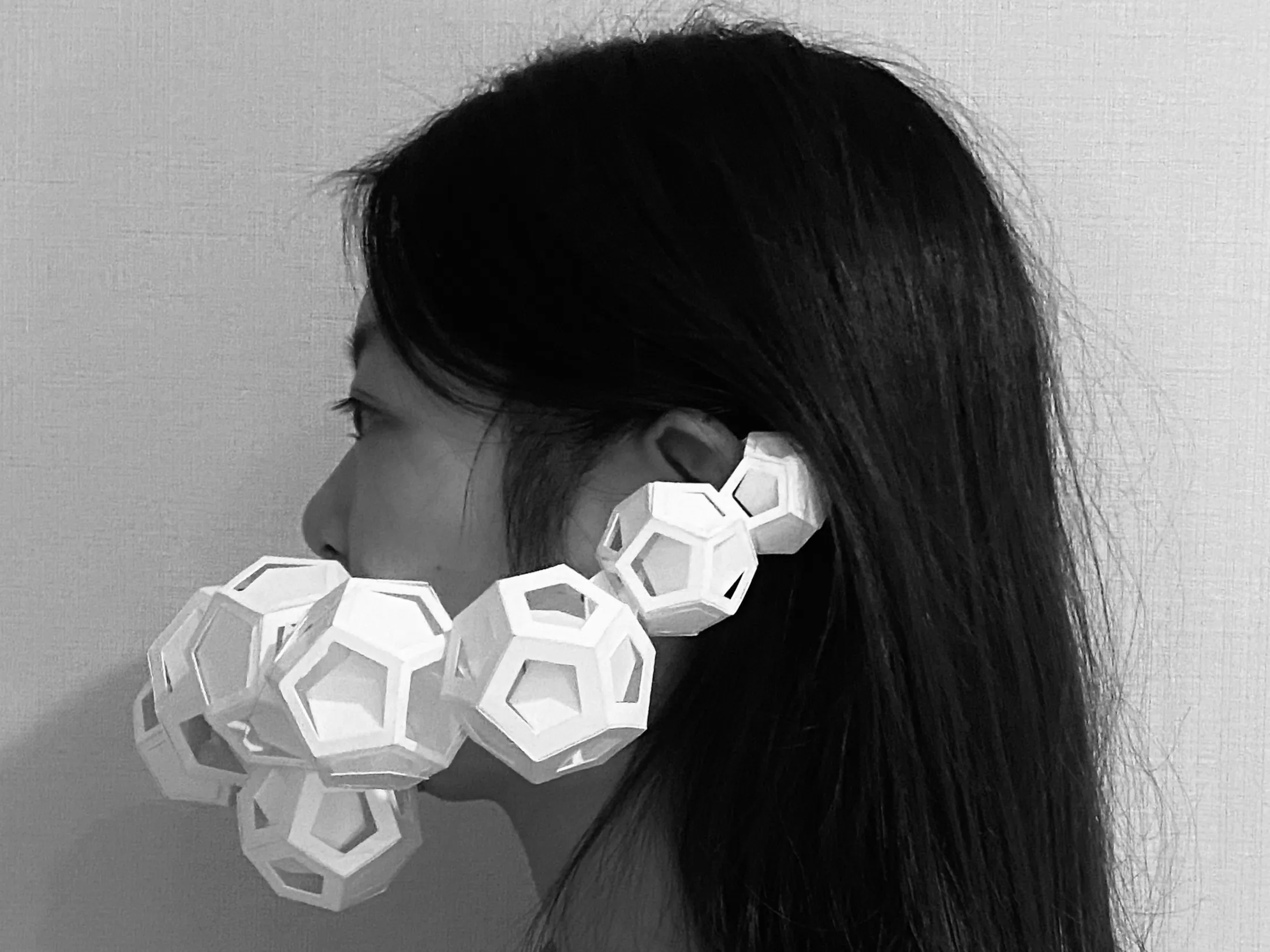
Adjustable Acoustic Boundaries 可调节的声音边界
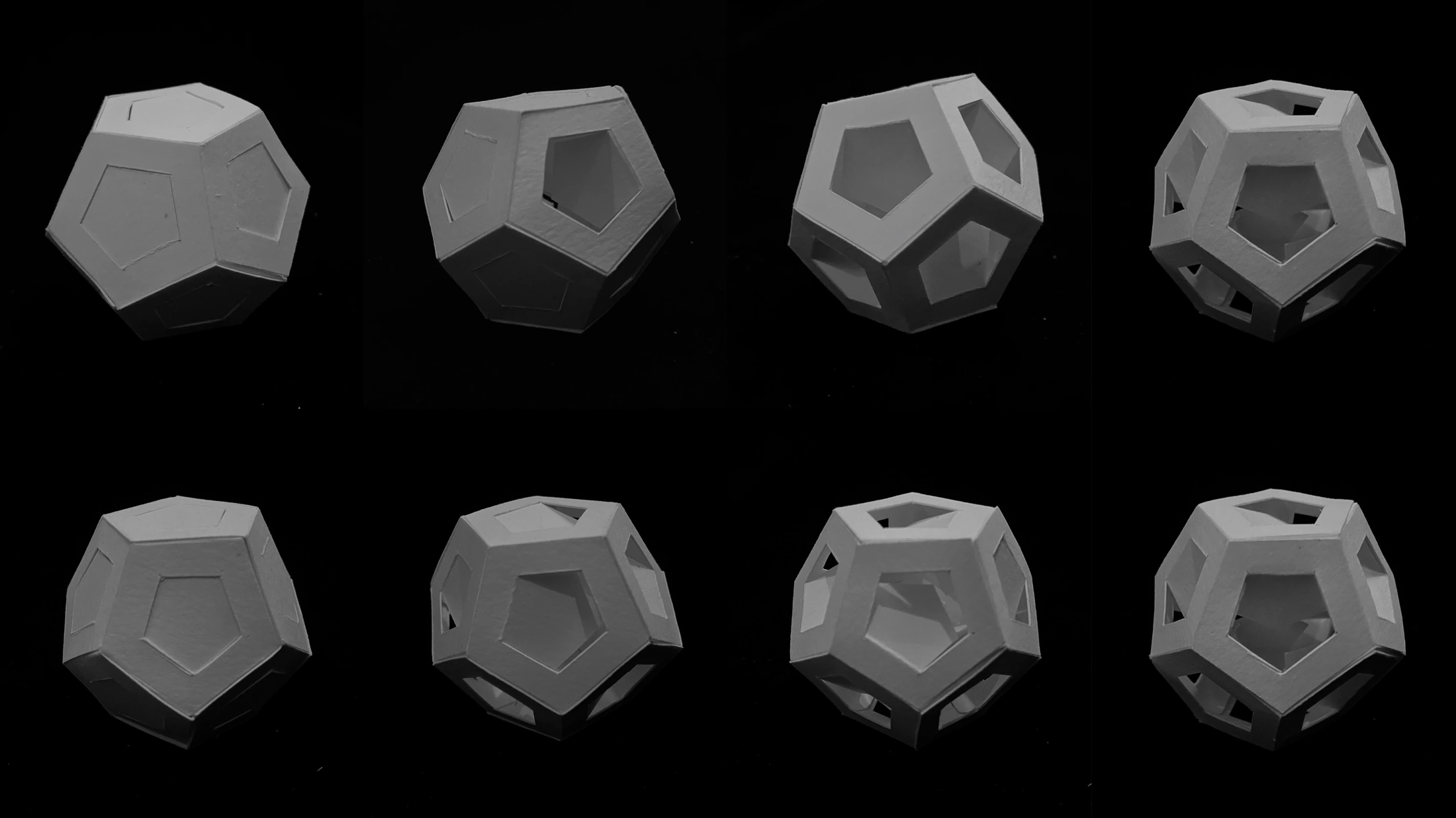
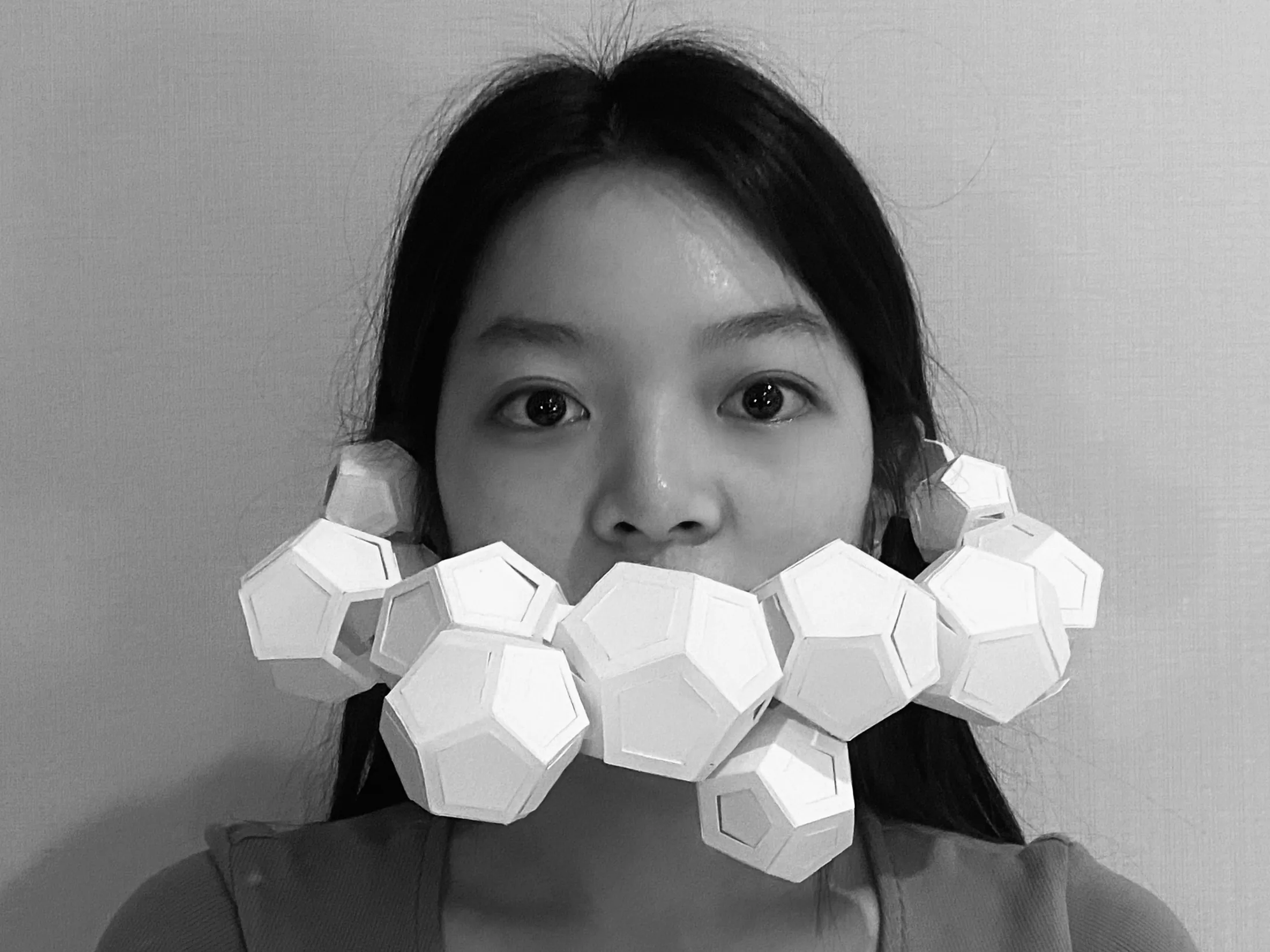
The wearable study places polyhedral modules around the mouth and ears, using the body as a reference for producing and receiving sound. A pentagonal flap on each face remains attached along one edge and can fold inward or outward. Different opening states explore reflection within a chamber and the exchange of sound between its interior and surroundings.
The modules interlock through their openings rather than being glued into a rigid assembly, allowing them to shift with the wearer. Front and side views compare the open and closed configurations; the articulated drawing records the connections between individual units.
可穿戴实验将多面体单元布置在口部与耳部周围,以身体作为声音发出与接收的参照。每个面上的五边形切口保留一侧相连,可以向内或向外翻折;不同开合状态用于探索声音在腔体中的反射,以及声音通过开口在内外之间传播的关系。
单元通过开口相互扣接,而非整体粘合,因此能够随佩戴者的动作产生相对位移。正面与侧面的照片对照装置的开合状态,展开草图则记录各个单元之间的连接关系。
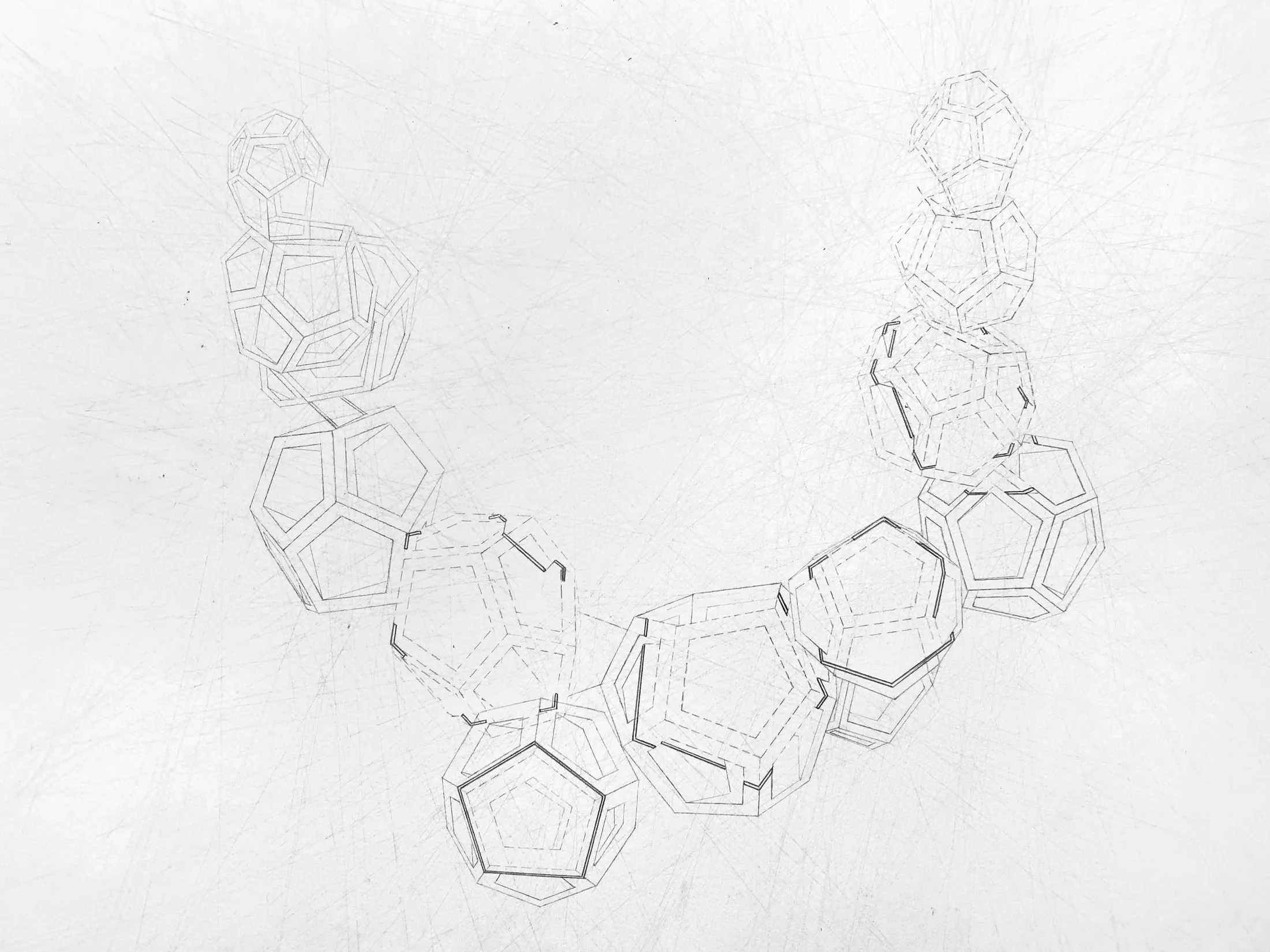
From Modules to Five Chambers 从单元到五个腔体
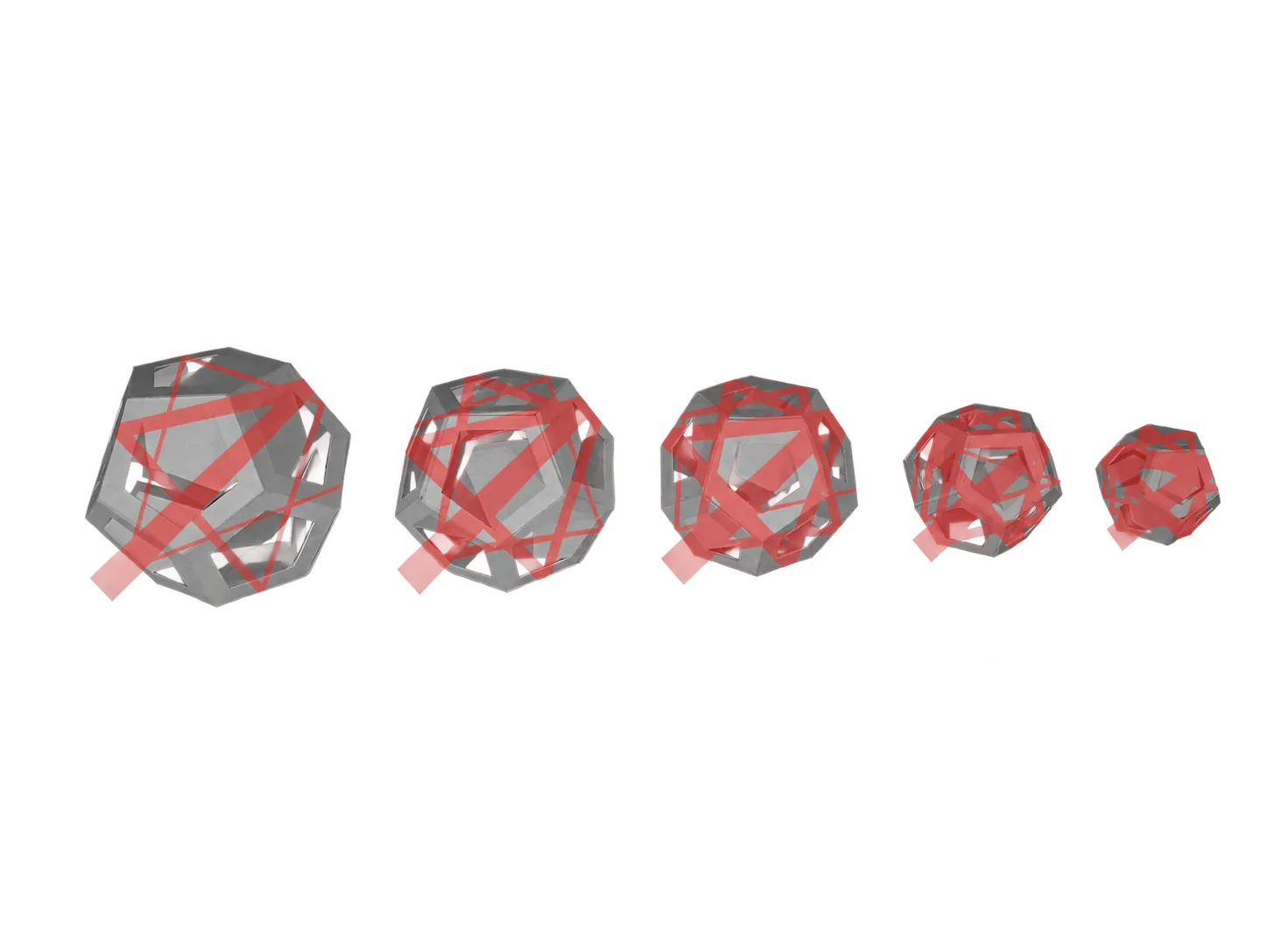
At an architectural scale, the modules become chambers that visitors can enter. Comparisons of module size, surface angle, and opening position use schematic sound paths to explore the relationship between geometry and reflection. The final proposal combines three equally sized modules with one larger and one smaller chamber, turning the wearable assembly into a sequence of inhabitable volumes.
当装置被放大到建筑尺度时,模块不再只是围绕面部的构件,而成为可进入的腔体。研究通过不同单元尺度、表面角度与开口位置的比较,以概念性声线示意探索几何与反射路径的关系。最终方案由三个同尺度单元、一个较大单元和一个较小单元组成,将可穿戴装置转化为一系列可以被进入的空间。
Shaped by the Terrain 让地形参与组织空间
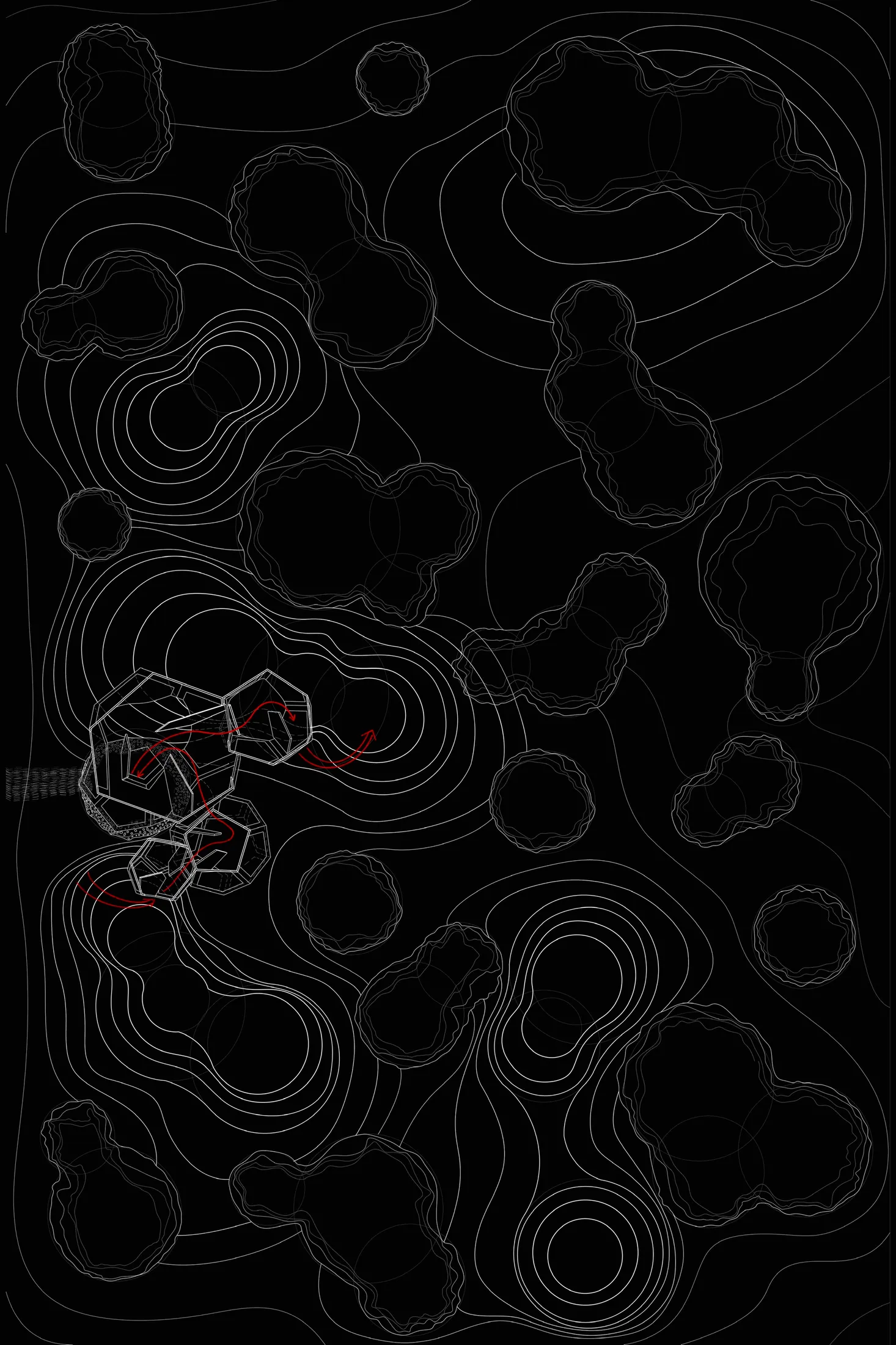
The sponge's porous structure is extended into a landscape of hollows, hills, and passages. Rather than placing intact regular solids on a level surface, the proposal adjusts the orientation and elevation of adjoining chambers to meet the terrain. The circulation study traces paths through the five chambers and the surrounding contours, linking the sequence of spaces to changes in the ground.
海绵式孔隙进一步被转译为场地中的凹地、山体与通道。设计保留地形的高差,并让相邻腔体调整朝向与标高,而不是将完整规则体简单放置在平地上。流线研究以穿越腔体与等高线的路径,呈现五个空间如何随地势衔接。
From Physical Model to Spatial Experience 从实体模型到空间体验
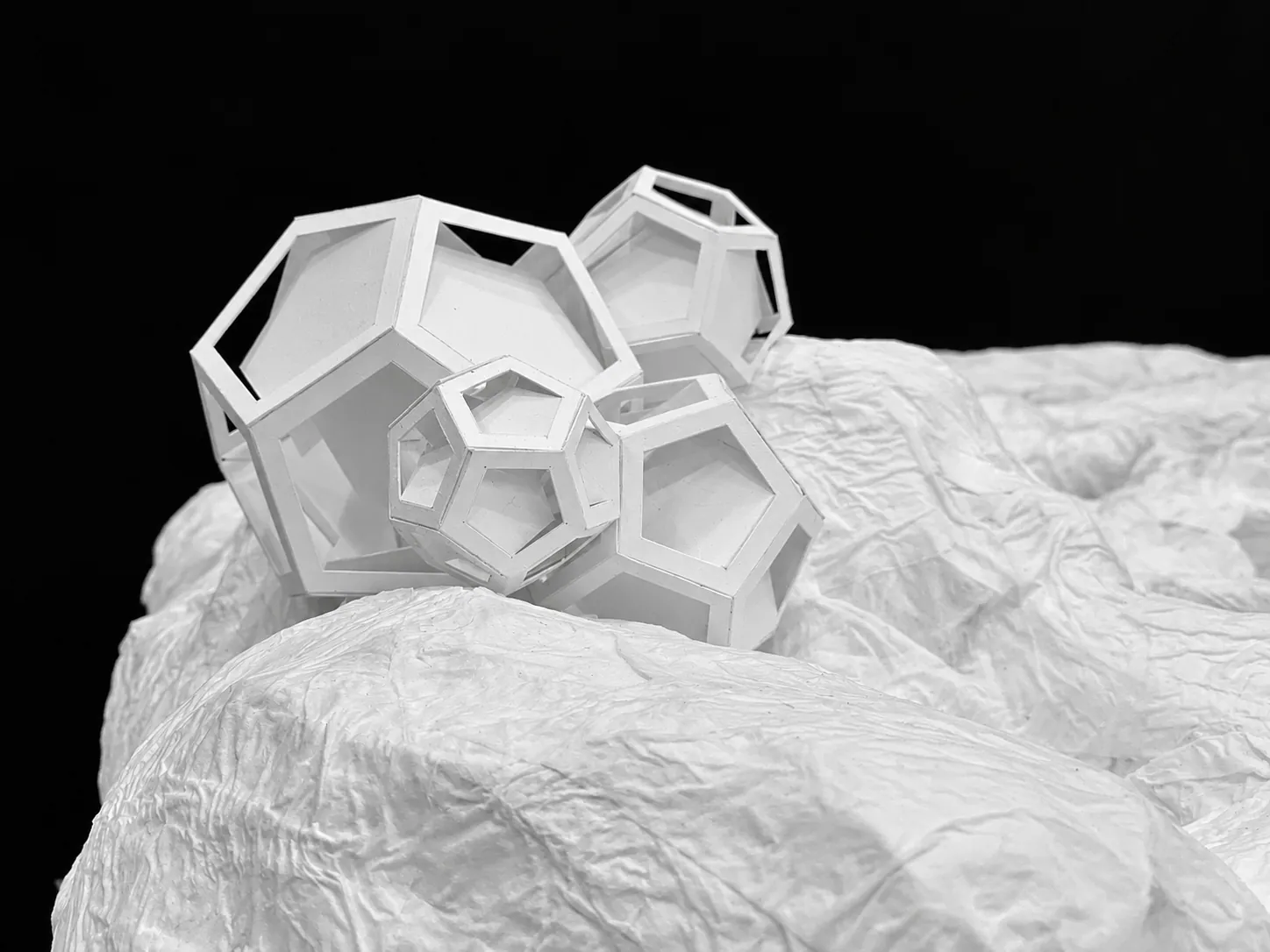
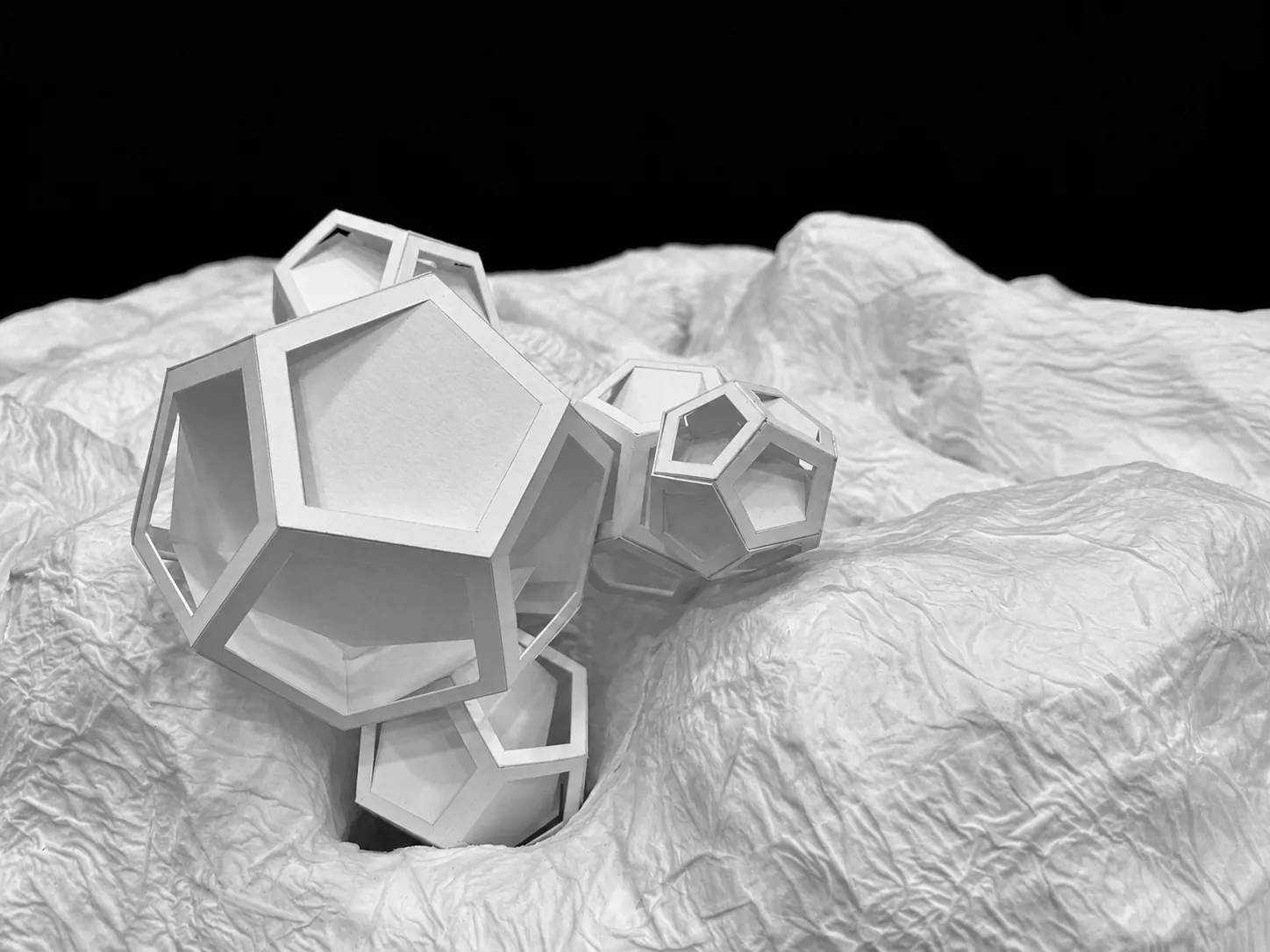
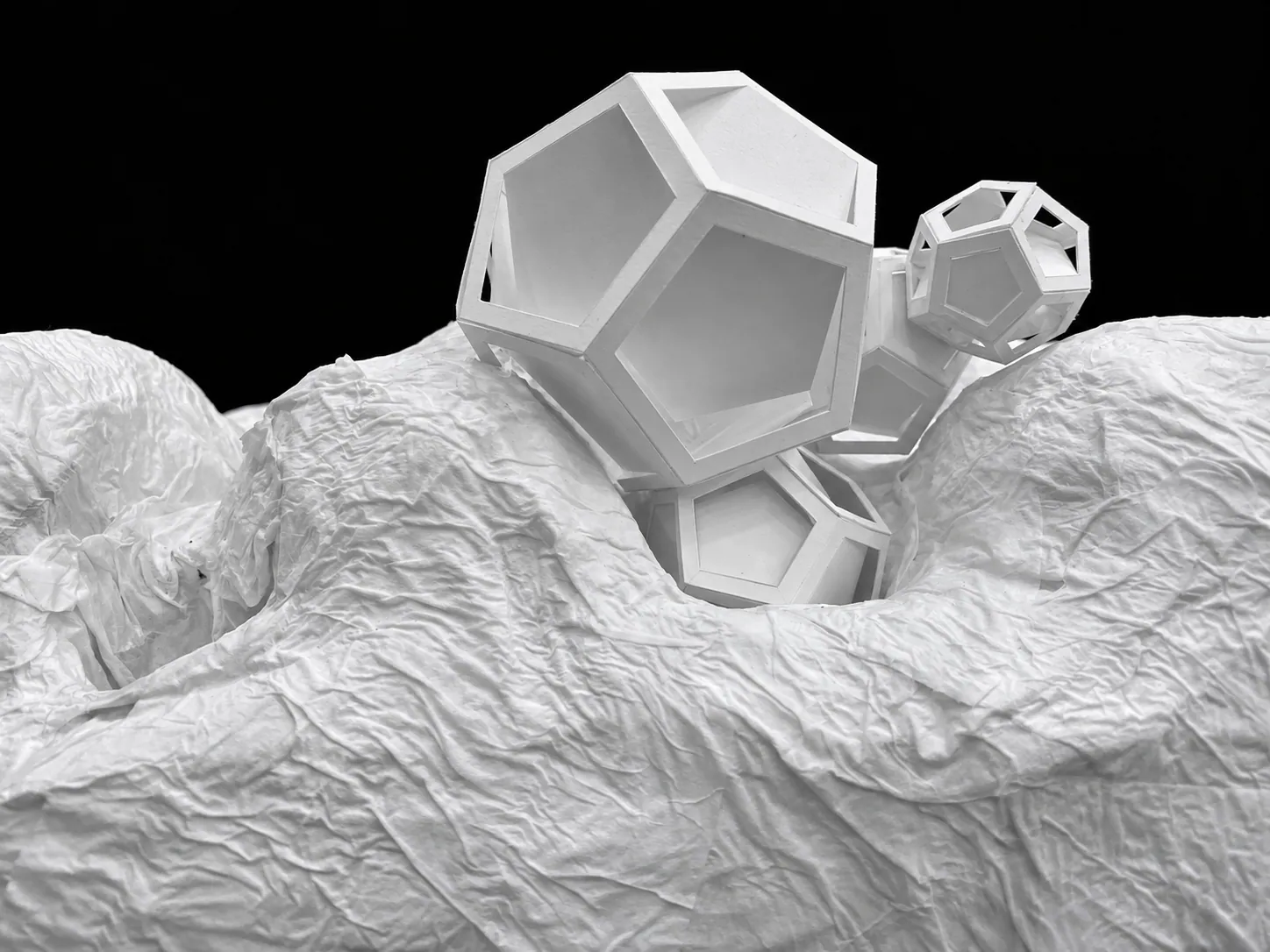
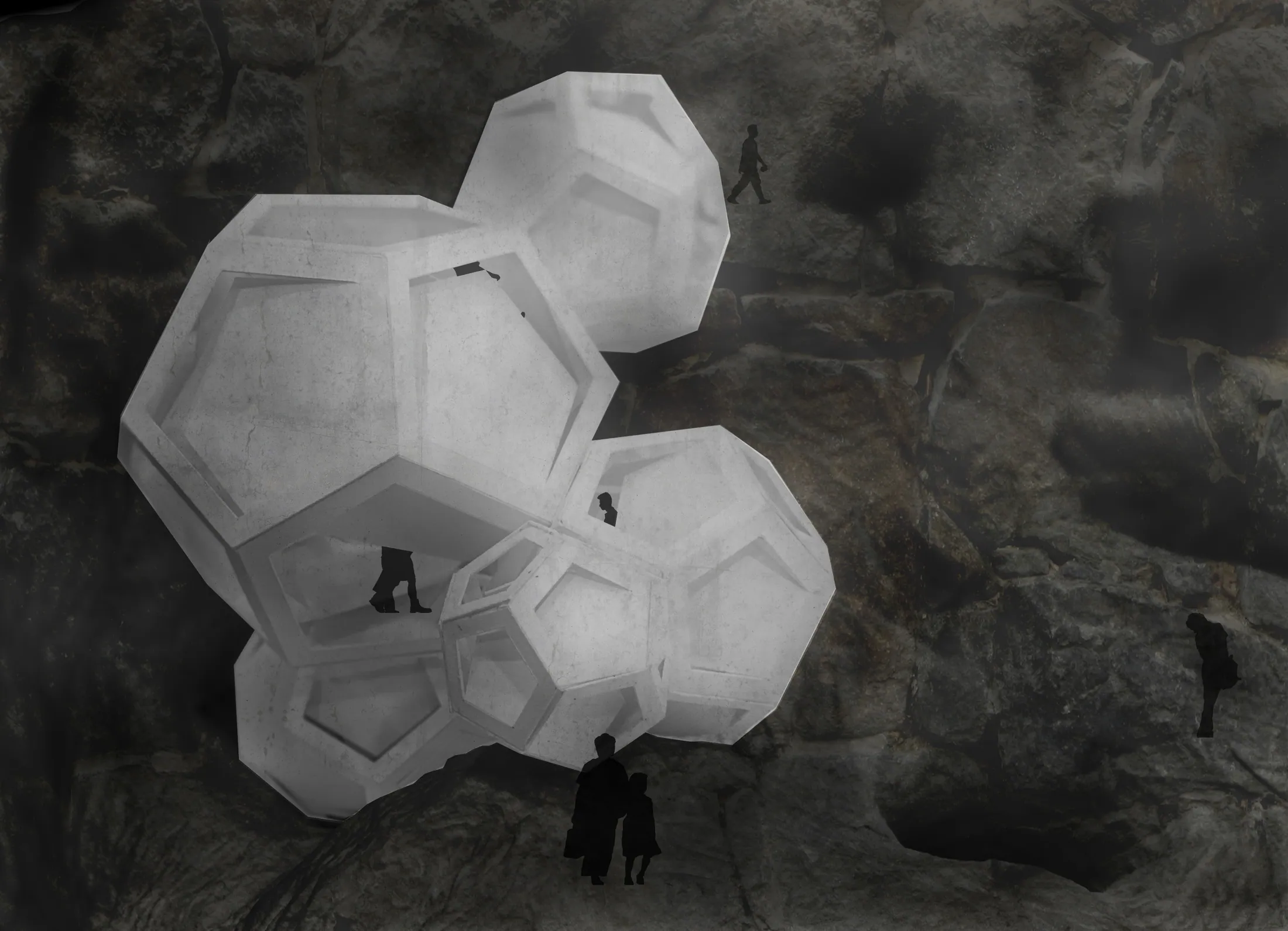
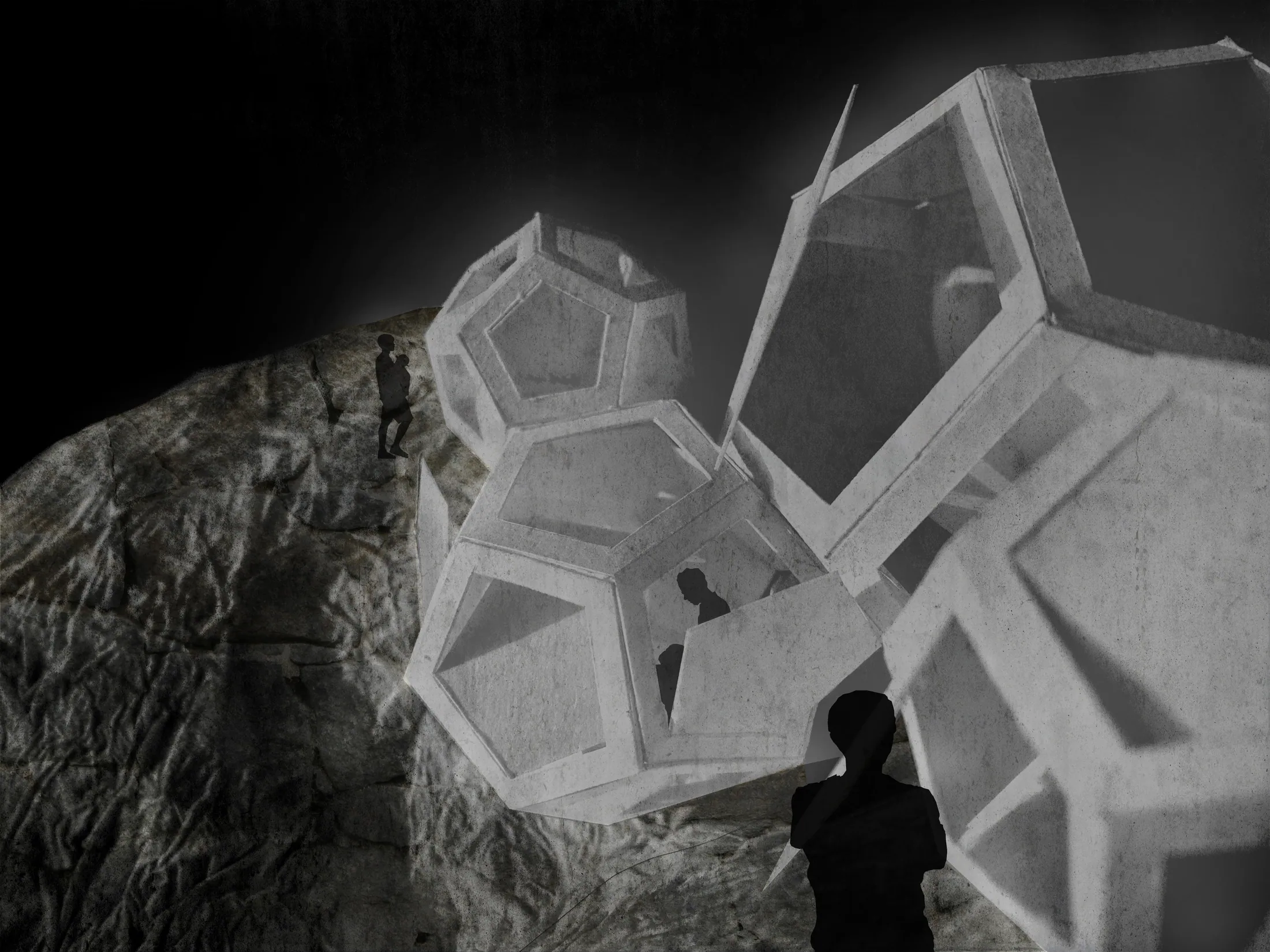
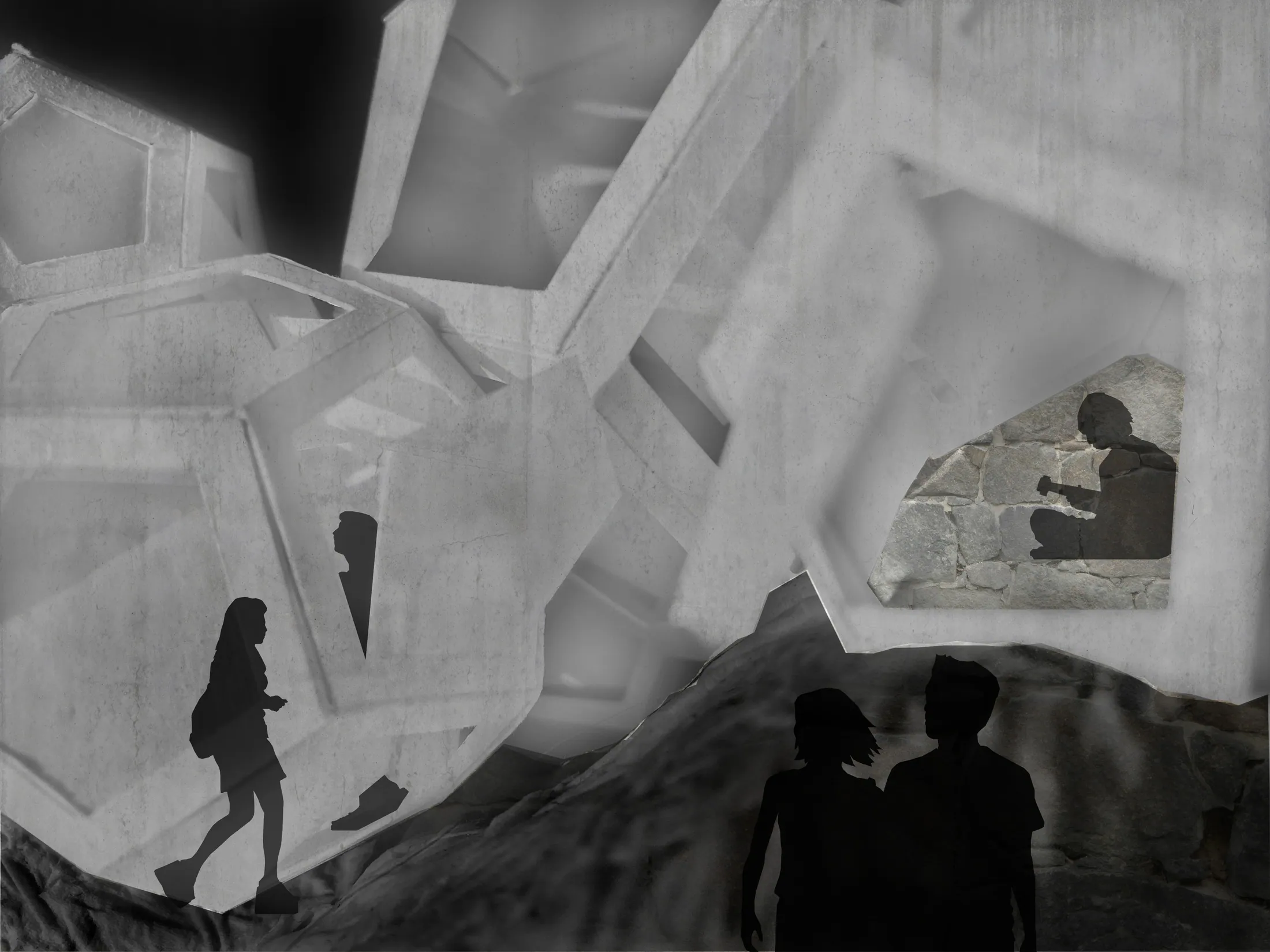
Physical models study how the five chambers meet the folded terrain, with closer views revealing pentagonal openings and the connections between volumes. The perspective collages then introduce the scale of visitors moving, pausing, and looking between chambers. Enclosed spaces overlap with gaps in the landscape, proposing an experience of listening that changes with the visitor's position and orientation.
实体模型呈现五个腔体与褶皱地形的接触方式,近景则展示五边形开口与单元之间的连接。随后,带有人物尺度的场景拼贴将几何关系转译为可以穿行、停留与观看的空间。建筑内部与山体空隙相互渗透,设计由此探索一种随着位置和朝向而改变的听觉体验。